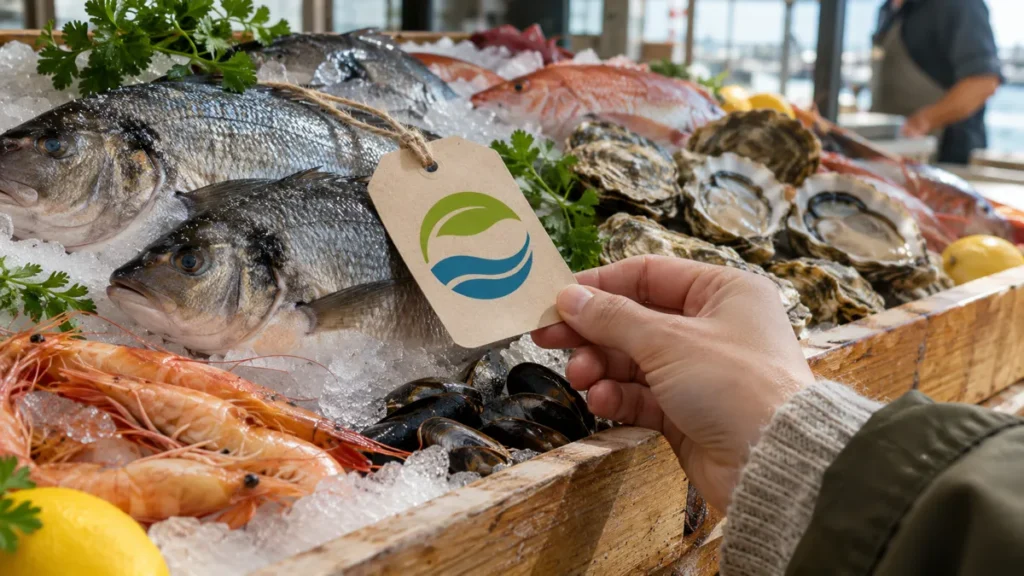
A seafood label can help you make a more informed choice, but different claims answer different questions. When comparing certified sustainable seafood, start by identifying the certification scheme and the product it covers. That gives you a firmer basis for choosing than a broad description such as responsibly sourced, which needs further explanation before it can be assessed.
In this article3 sections
Wild Fisheries and Fish Farms Are Assessed Differently
Wild fish and farmed seafood come from different production systems, so their assessment criteria need to reflect different concerns. The Marine Stewardship Council, or MSC, sets a standard against which independent certifiers assess fish populations, ecosystem impacts and fishery management. The focus is the fishery supplying the catch, rather than a general judgement about every fish of that species.
Farm certification addresses conditions within aquaculture. The Aquaculture Stewardship Council, or ASC, sets requirements covering environmental and social issues in seafood farming. Someone comparing farmed prawns with wild fish should therefore expect different supporting information, rather than treating the two labels as competing scores on a single scale.
This distinction helps when a particular issue matters to you. A claim about fishery management does not automatically answer a question about packaging or transport emissions. Look for evidence addressing the concern itself, and avoid assuming that one certification establishes every aspect of a product’s environmental performance.
A Label Applies to a Particular Product
Check the pack you intend to buy. A brand may sell both certified and non-certified products, and similar-looking items can have different sources. A logo on a company website or a statement about future sourcing ambitions does not establish the status of everything in its range.
For loose seafood, ask which item a counter sign describes. A display can contain several species and products from different suppliers, so the claim should be clearly connected to the fish being sold. If staff cannot explain that connection, you have a reason to ask for clarification before relying on the statement.
Traceability helps preserve this connection as seafood passes through processors and distributors. In the MSC system, chain of custody controls address identification, separation and records for certified products. These controls serve a different purpose from the assessment of the original fishery: they help support the link between that source and the product reaching the buyer.
Price and Portion Size Still Matter
Once you understand the sourcing claim, compare products that suit the meal you actually plan to make. Pack weight alone may be misleading if one option includes a sauce or a substantial quantity of liquid. Check the usable quantity, likely number of portions and preparation required before deciding which offers better value.
Choose a format you can store and use sensibly. Individual frozen portions may suit someone cooking for one, while a larger pack could work for a household that will use it promptly. Certification does not tell you whether a particular pack size fits your routine, and buying more than you need can undermine an otherwise considered choice.
The sourcing evidence deserves a similar level of attention. Understanding how fish stocks, ecosystem impacts and management are assessed makes it easier to interpret a wild-caught seafood claim without expecting the label to answer unrelated questions. Where information is missing, a specific enquiry about the product is more useful than a general request for reassurance.
A practical purchase brings the evidence and the meal together. Identify what the certification covers, confirm that it applies to the item in front of you, then choose a quantity and format you can use. You can make a considered decision without assuming that any single label removes every trade-off.